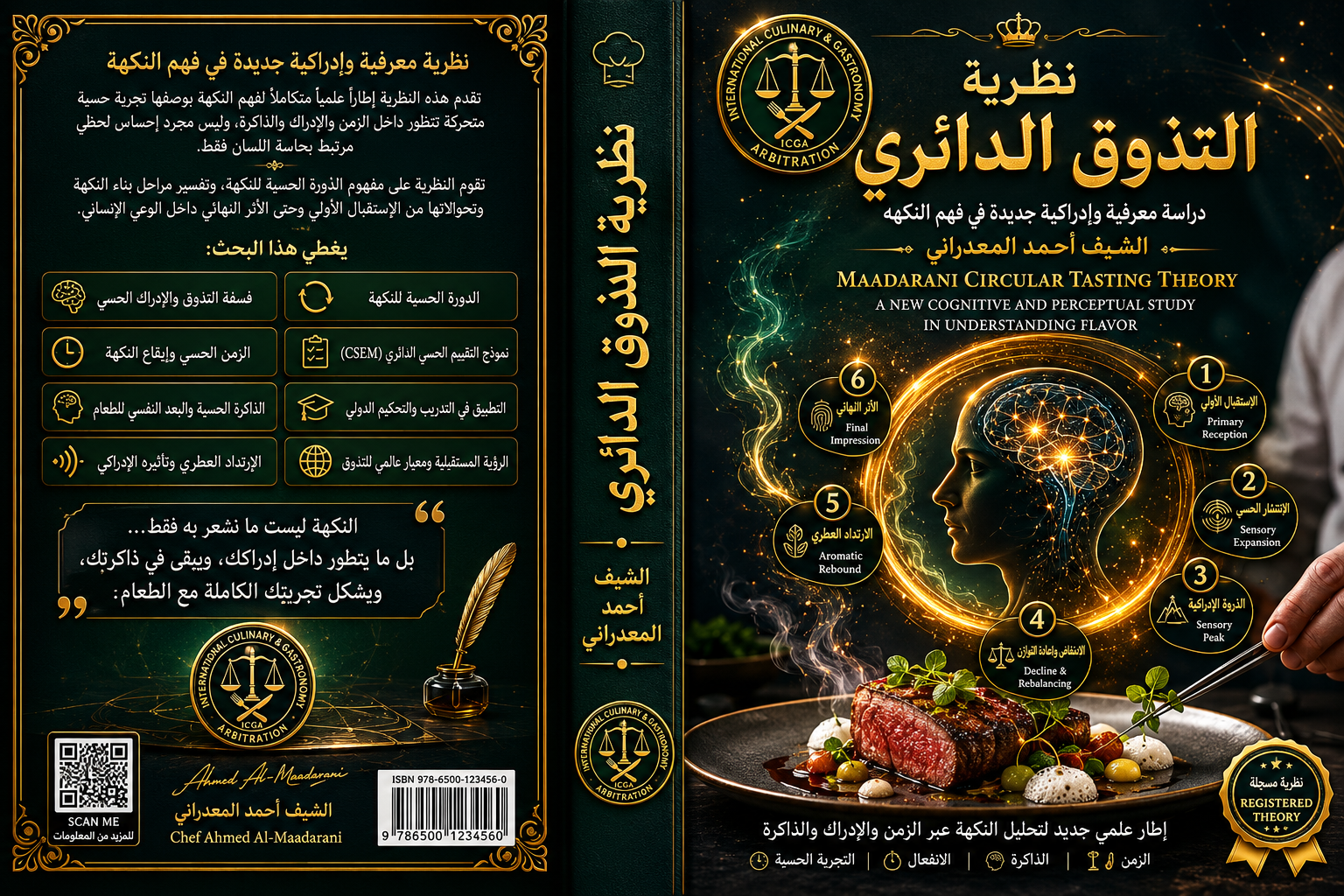
المعدراني، أحمد. (2026). نظرية التذوق الدائري: دراسة معرفية وإدراكية جديدة في فهم النكهة. IUOAMC Global Platform.
Within circular tasting, these senses do not operate separately. They move within a connected “perceptual loop.” A delayed aroma may reinterpret the initial taste; texture may change the perception of heat; visual memory may influence the final sensation of flavor. This continuous interaction among the senses explains why the tasting experience differs from one person to another and why the same food can generate multiple and changing impressions.
Circular tasting therefore does not study flavor as a single isolated element. It studies it as an integrated sensory network moving through time and perception, where different senses continuously interact to produce the final food experience with all its complexity, depth, and psychological effect.
Sensory Memory and Flavor Reconstruction
Sensory memory is one of the most important elements that gives Circular Tasting Theory its perceptual depth. The theory assumes that human beings do not taste food only through direct senses, but through ongoing interaction between the present sensation and the sensory experiences stored in memory. Flavor therefore becomes an experience that is mentally reconstructed again and again, rather than a mere immediate response to a food substance.
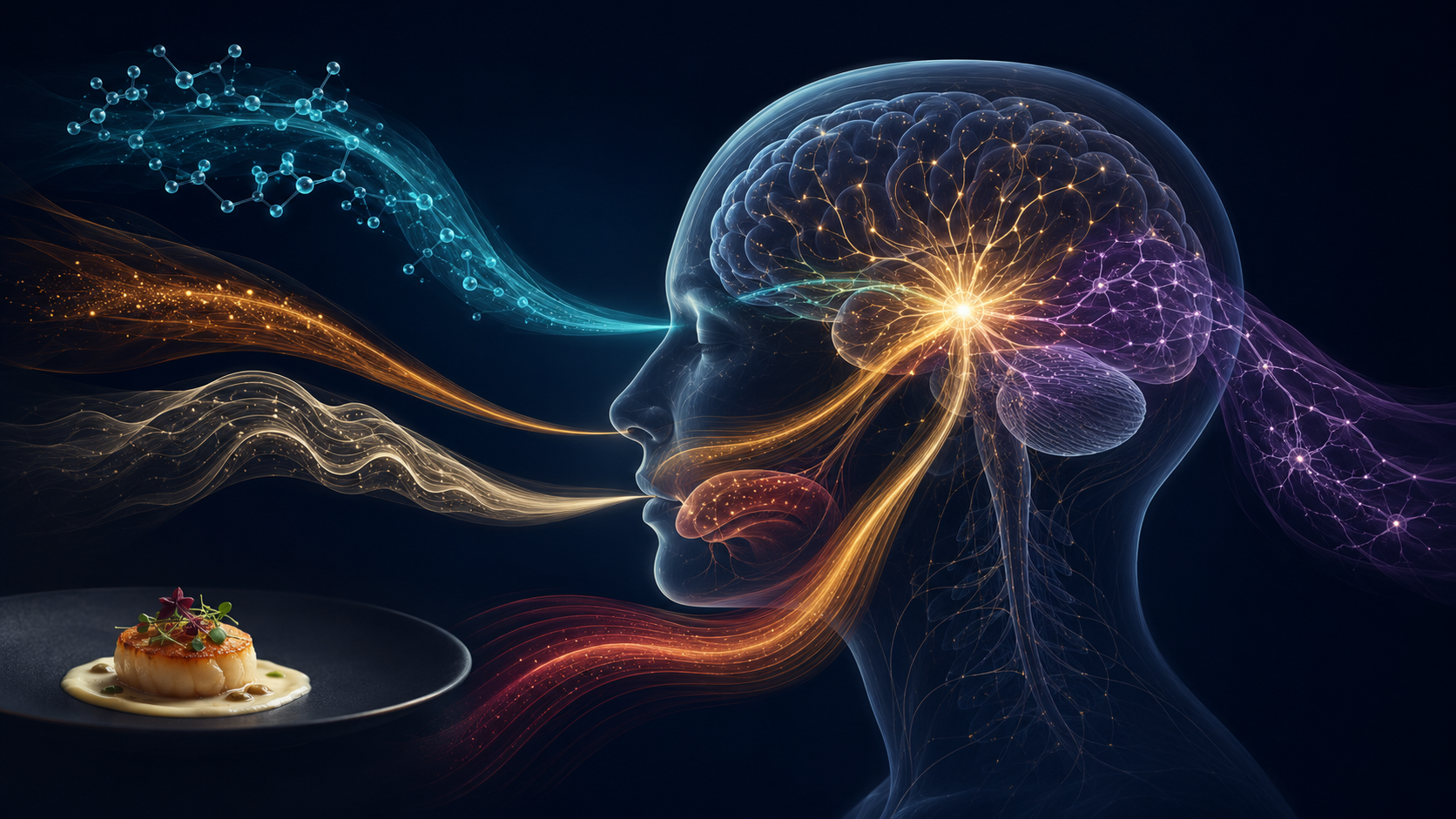
When a person tastes a particular food, the brain does not analyze chemical signals alone. It automatically begins comparing them with similar previous experiences. Flavor may be connected to childhood memories, emotional situations, places, people, or old experiences. This makes food capable of summoning complete psychological states through the appearance of a particular aroma or taste.
This explains why two people may have entirely different experiences when eating the same dish. Tasting does not depend only on the properties of food, but also on the “sensory background” of each individual: the stored memories and impressions that the brain carries regarding different aromas and flavors. Food perception thus becomes a deeply personal experience, not a uniform process shared equally by all human beings.
In circular tasting, memory plays an important role during the later stages of the sensory cycle. After the initial effect of food declines, the brain begins to reanalyze the experience in a calmer way. Here, “recovered flavors” may appear, even if they were not clear at the beginning. The taster may feel at this stage that taste has returned, whether through memory, aromatic rebound, or psychological effect.
The theory calls this phenomenon Flavor Reconstruction. It is the process through which the brain reshapes the tasting experience by relying on remaining aromas, sensory impressions, and memories associated with the food. Some foods therefore leave a long-term effect even after actual tasting has ended, because they continue to operate within human perceptual awareness.
The theory also indicates that the strength of flavor does not always depend on its direct intensity, but on its ability to remain within memory. Some foods have a strong momentary impact but are quickly forgotten, while other foods are quieter yet leave a long-term mental effect because of their aromatic depth, psychological association, or temporal complexity.
The influence of sensory memory appears clearly in fermented foods, specialty coffee, dark chocolate, and traditional dishes connected to cultural identity. In these examples, flavor intersects with personal emotion to create an experience that goes beyond the limits of direct physical tasting.
Through this understanding, tasting becomes a process of “extended perception” that continues even after food has disappeared from the mouth. Flavor becomes a psychological, neural, and mental trace capable of reshaping itself within human sensory awareness. This is one of the essential foundations of the philosophy of circular tasting.
Aromatic Return and Sensory Rebound
Aromatic rebound is one of the most complex and influential phenomena in Circular Tasting Theory because it represents the stage in which flavor reappears after the direct sensation of food has declined. This return does not occur in the same way flavor appeared at the beginning. It usually arrives in a deeper, quieter, and more structured form, giving the sensory experience a renewed temporal dimension.
In traditional tasting, it is often assumed that the end of chewing or swallowing means the end of the tasting experience. Sensory reality proves otherwise. Many foods continue to send aromatic signals after food has left the mouth, especially through retronasal breathing, which allows volatile compounds to move internally toward the olfactory system. At this moment, the taster feels that the flavor has “returned again,” but in a form different from the initial impression.
The theory calls this stage Sensory Rebound. This concept refers to the return of the perceptual effect of food after its direct sensation has receded. Such rebound is one of the most important signs that tasting is not linear, but circular and renewable. Flavor continues to move within perception even after the primary physical interaction with food has ended.
Aromatic rebound appears clearly in foods rich in complex aromatic compounds, such as specialty coffee, fine tea, dark chocolate, aged cheeses, fermented sauces, and certain spices. In these foods, the true peak is not always at the beginning; it may appear after swallowing, when internal aromas begin to rise toward the olfactory system.
This rebound may also change the interpretation of flavor itself. A food may seem sharp or unclear at the beginning, then later transform into a more balanced and harmonious sensation after delayed aromatic layers appear. This transformation explains why some foods require “sensory patience” in order to be understood correctly.