المعدراني، أحمد. (2026). نظرية التذوق الدائري: دراسة معرفية وإدراكية جديدة في فهم النكهة. IUOAMC Global Platform.
The temporal structure of flavor is one of the most important foundations of Circular Tasting Theory. The theory assumes that every flavor possesses its own temporal path, and that taste does not appear all at once. Instead, it develops gradually according to a perceptual sequence connected to the chemical, sensory, and aromatic properties of food.
In traditional understanding, flavor is treated as an immediate state that occurs when food touches the tongue. Yet the actual experience shows that some ingredients need time to appear, and that certain effects are not perceived until interaction continues inside the mouth or until aromatic compounds travel to the olfactory system through retronasal breathing. Time is therefore not an external element surrounding tasting; it is part of the structure of flavor itself.
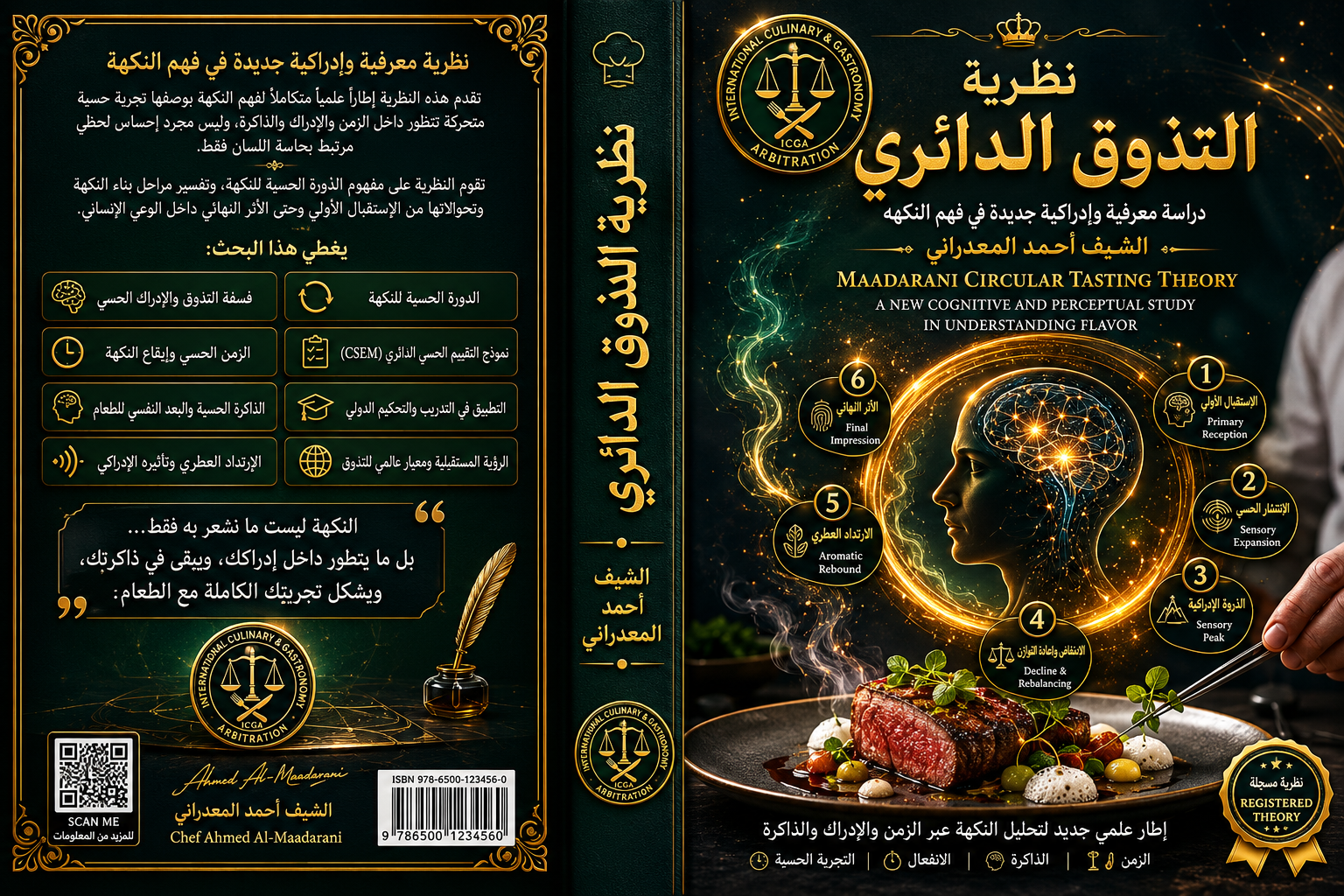
The temporal structure usually begins with what may be called the “initial response.” This is the stage in which the tongue detects the basic signals of food, such as sweetness, acidity, or saltiness. This stage is often fast and direct, but it does not represent the complete image of flavor. A second and more complex stage follows, in which the secondary layers of food appear, such as aromatic notes, fatty effects, or thermal interactions.
As tasting continues, flavor enters the stage of “sensory expansion.” Here, food compounds interact with saliva, heat, and breathing, changing the initial sensation and revealing new details that may not have been noticeable at first. During this stage, some flavors begin to rise gradually until they reach the perceptual peak, the moment at which the sensory experience achieves its highest degree of clarity and integration.
However, the peak does not mark the end of the temporal cycle. It is followed by a stage of gradual decline, during which some sensory signals recede while others remain for a longer time. Interestingly, certain foods reveal their true character precisely during this stage, especially fermented or aromatically complex foods, as deeper flavors appear after the strong initial effects have subsided.
Then comes the stage of “perceptual return,” one of the most important stages in circular tasting. In this stage, certain aromas or sensations return indirectly after swallowing, often through retronasal breathing or what is known as aromatic rebound. The taster then feels that the flavor has returned, but in a different, more mature, and quieter form, creating a long-lasting impression within sensory memory.
The temporal structure differs greatly from one food to another. Some foods have a short and fast cycle, while others have a long and complex cycle that passes through multiple transformations before settling within perception. Cooking method, temperature, fat percentage, and fermentation level all influence the speed of flavor development and the nature of its temporal movement.
By understanding this temporal structure, tasting becomes more precise and deeper. It changes from an immediate response into an analytical process that studies how flavor is born, how it develops, how it disappears, and how it returns within the human sensory experience.
Multisensory Perception in Circular Tasting
True tasting does not depend on the tongue alone. It results from a complex interaction among several sensory systems that operate simultaneously within the body and brain. For this reason, Circular Tasting Theory views flavor as a multidimensional experience in which the different senses participate within a single perceptual cycle. Each sensory element can influence and reshape the interpretation of the others over time.
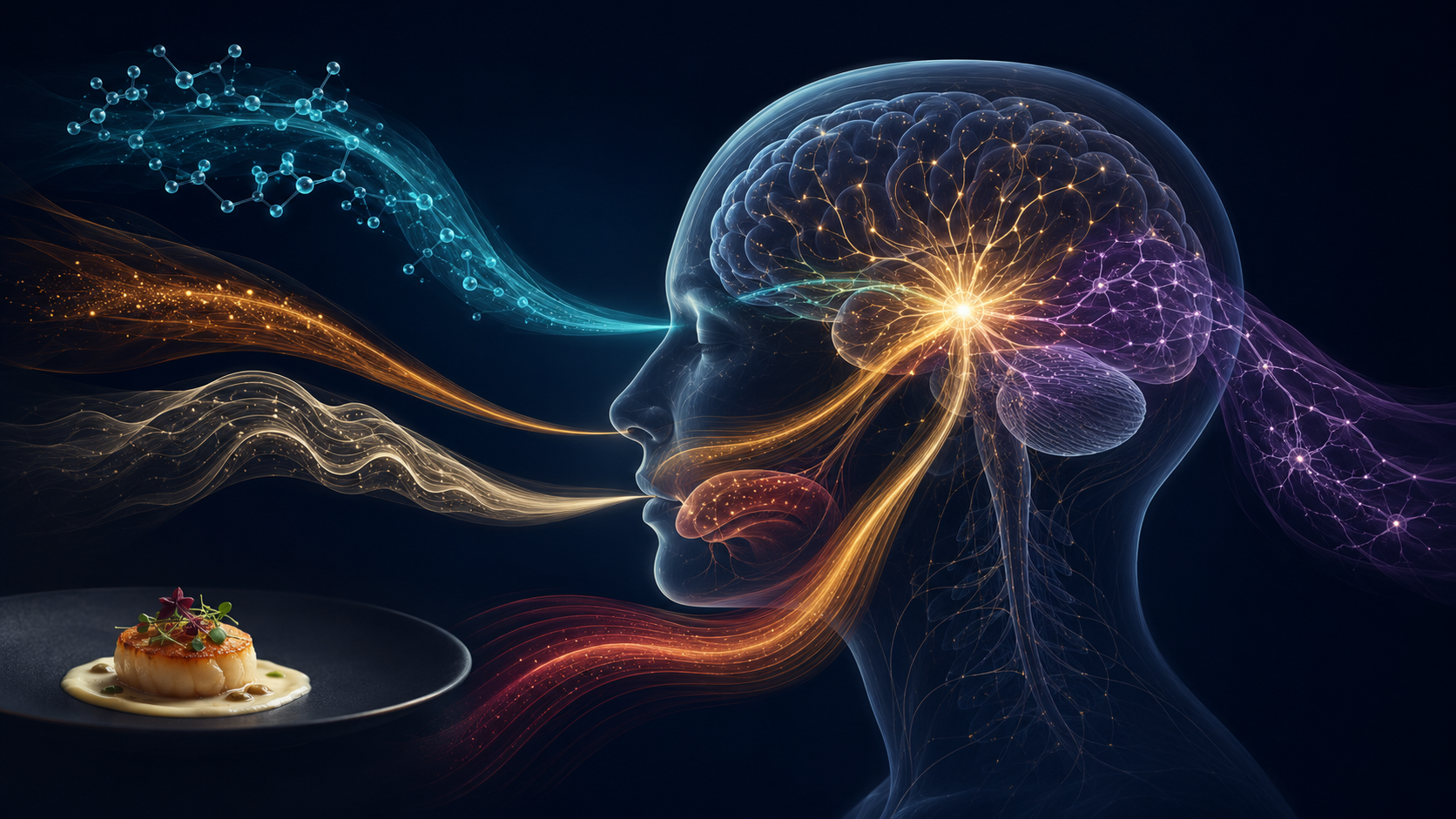
The sensory interaction usually begins with the tongue, where taste receptors receive basic chemical signals such as sweetness, acidity, bitterness, saltiness, and umami. Yet these signals alone are not sufficient to form the complete experience of food. Much of what human beings describe as “flavor” actually depends more on aroma than on direct taste.
The olfactory system plays a central role in constructing food perception, especially through what is known as retronasal breathing. During chewing, swallowing, and exhalation, aromatic compounds move from the mouth to the nose. This process allows delayed sensory layers to appear, layers that may not exist in the first impression. It explains why some foods change noticeably after several seconds of tasting.
Food texture also participates deeply in shaping flavor. Creamy, crunchy, fibrous, or crisp textures do not only affect the physical sensation of food; they also change the speed at which aromatic and taste compounds are released inside the mouth. Fatty foods, for example, prolong flavor retention, while lighter structures produce a rapid and short-lived release.
Temperature also influences the sensory experience. The temperature of food may reveal or hide certain flavors, and thermal change during eating can alter the way aromas and tastes are perceived. Some foods become more complex as their temperature gradually decreases, while others lose part of their sensory identity when cooled.
Hearing and sight also have indirect but important effects on tasting. The sound of crunching, for example, enhances the sensation of freshness, while the shape, color, and arrangement of a dish create mental expectations that affect the interpretation of flavor before the food even reaches the mouth. Food perception is therefore a holistic process that goes beyond the physical boundaries of the food itself.