👥 Apply Membership ⚖️ Apply Judge 🖼 Members ⚖️ Judges
MASTER CHEFS INTERNATIONAL JOURNAL

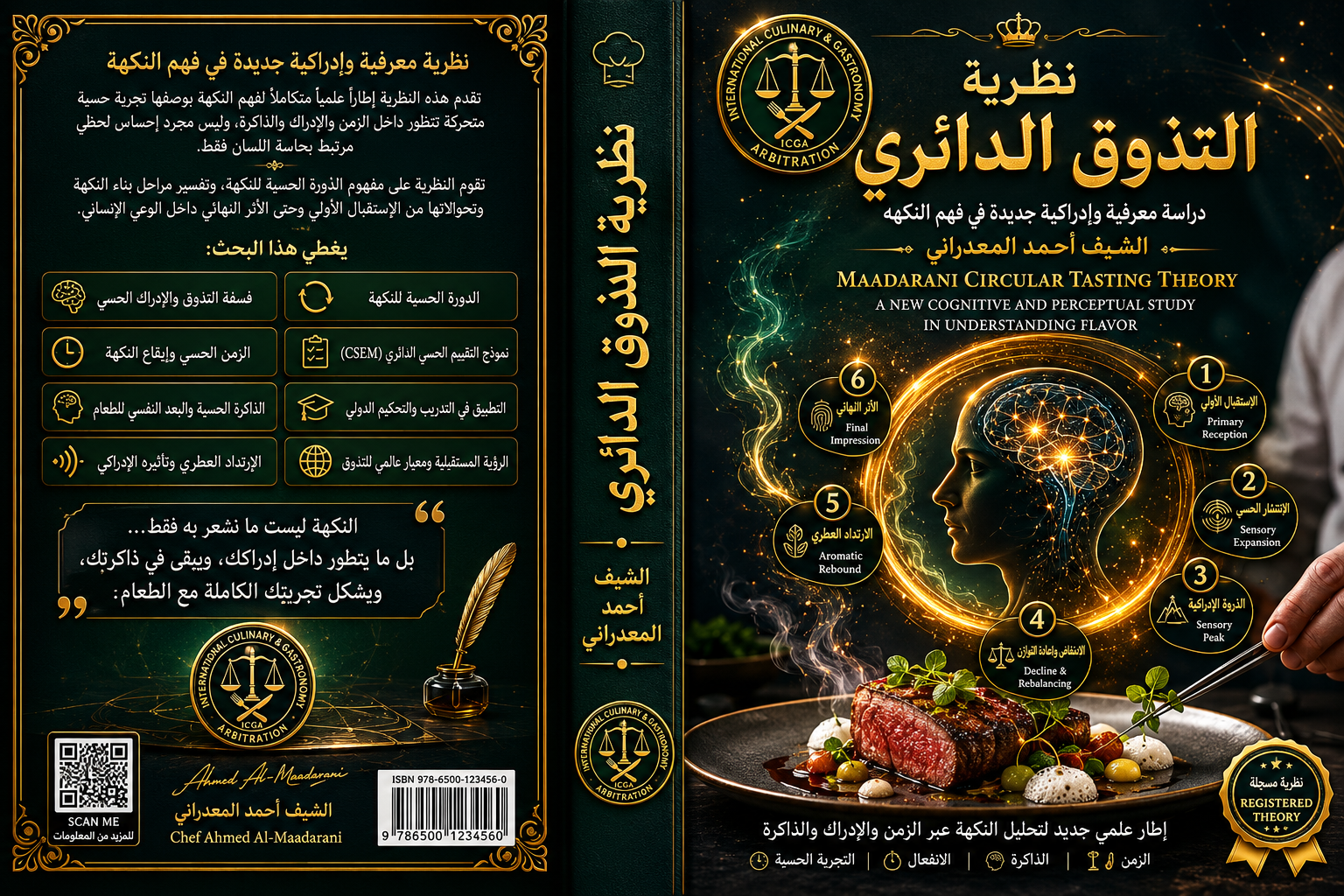
Maadarani Circular Tasting Theory: A New Cognitive and Perceptual Study in Understanding Flavor

Chef Ahmad Maadarani
IUOAMC-MCTT-2026-001
Page 30 / 30
IUOAMC Global Platform
Publisher
IUOAMC Global Platform
Publisher of Master Chefs International Journal
The journal is published within the IUOAMC Global Platform for academic publishing, digital verification, and institutional archiving.
Publisher Page

Research Files

PDF — نظرية التذوق الدائري: دراسة معرفية وإدراكية جديدة في فهم النكهة
Paid download — GBP 1.00
تحميل البحث PDF

Academic Publication Details

Author Chef Ahmad Maadarani
Published Date 2026-05-22 16:08:19
Archive Code IUOAMC-MCTT-2026-001
Publication Type Academic Research Article
Abstract
This study presents the Circular Tasting Theory as a new cognitive and perceptual framework for understanding flavor as a dynamic sensory experience rather than an immediate taste response. The theory proposes that flavor moves through a complete sensory cycle beginning with primary reception, expanding through sensory development and perceptual peak, then declining, rebounding aromatically, and stabilizing as a final impression in memory. The research further introduces the Circular Sensory Evaluation Model (CSEM) as an applied framework for professional culinary judging, sensory education, quality evaluation, and modern gastronomy. Its importance lies in redefining tasting as a time-based, multisensory, psychological, and cognitive experience that may support future standards in culinary science and sensory analysis.
Citation Tools
المعدراني، أحمد. (2026). نظرية التذوق الدائري: دراسة معرفية وإدراكية جديدة في فهم النكهة. IUOAMC Global Platform.
RIS BibTeX
Citation copied.
APA Citation:
المعدراني، أحمد. (2026). نظرية التذوق الدائري: دراسة معرفية وإدراكية جديدة في فهم النكهة. IUOAMC Global Platform.

Circular Tasting Theory also emphasizes the importance of preserving the human and cultural dimension of tasting, because food is not merely a chemical composition. It is part of memory, identity, emotion, culture, and human experience. Any future development in culinary science must therefore preserve this human depth rather than reducing food to numbers or technical analyses alone.

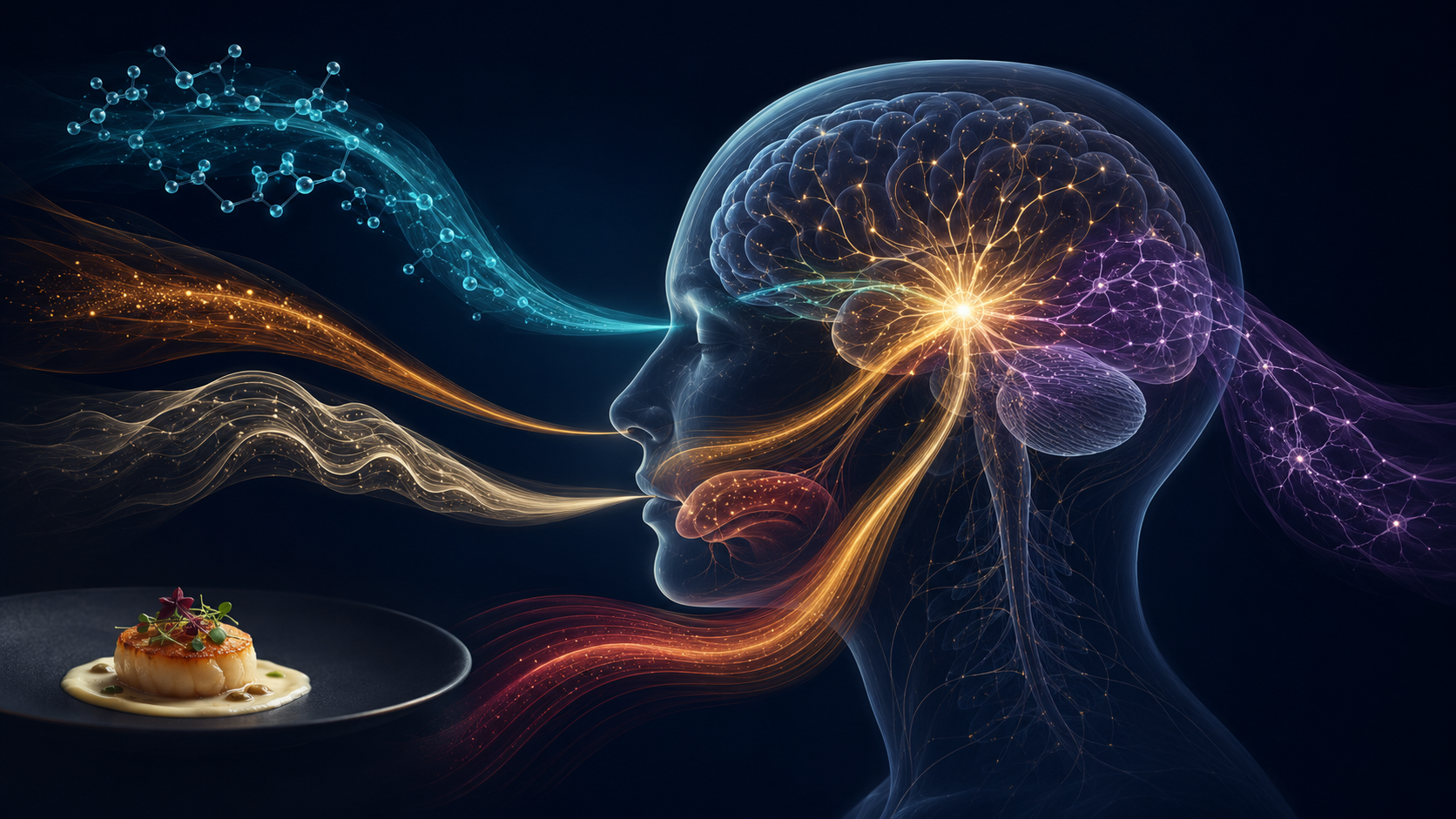
In the theory’s future vision, circular tasting may become the basis of a new global school in culinary science and sensory analysis. Flavor would transform from a simple traditional concept into an integrated perceptual science that studies flavor movement, sensory time, the relationship between food and awareness, the formation of taste memory, and the psychological effect of the food experience.

Thus, Circular Tasting Theory concludes its vision by considering food a moving human experience that goes beyond the limits of taste, linking the senses, mind, time, and memory in an integrated perceptual cycle that may represent the future of human understanding of flavor and food in the modern century.
Page 30 / 30
This content is protected by intellectual property rights and the institutional policy of the Master Chefs International Journal. Copying, republishing, capturing, redistribution, or unauthorized use is prohibited.