المعدراني، أحمد. (2026). نظرية التذوق الدائري: دراسة معرفية وإدراكية جديدة في فهم النكهة. IUOAMC Global Platform.
This framework may also contribute to the development of several fields, such as high-end food production, sensory product design, coffee and chocolate analysis, modern kitchen development, judging training, and food-related artificial intelligence, by offering a more precise model for understanding how human beings interact with food through time.
Academically, this standard may allow the emergence of new specializations in food perception, sensory time, flavor philosophy, perceptual aromatic analysis, and the science of sensory memory of food. This would open the door to a new scientific and intellectual school in modern culinary arts.
Circular Tasting Theory also affirms that building a global standard does not mean unifying tastes or eliminating cultural diversity. Rather, it aims to provide a shared analytical framework that allows deeper and fairer understanding of different food experiences, regardless of their cultural or technical backgrounds.
In this context, food becomes a global sensory language that can be studied and analyzed within a unified perceptual system without losing its specificity or cultural identity.
Thus, Circular Tasting Theory represents a step toward redefining global tasting by transforming flavor from a momentary sensation into a moving perceptual system that can be measured, analyzed, and understood within an advanced professional and academic framework that may shape the future of modern tasting sciences.
Scientific Findings of the Theory
Through the theoretical and perceptual analysis presented by Circular Tasting Theory, a set of fundamental findings can be drawn that redefine the concepts of flavor and tasting in modern culinary science. These findings affirm that tasting is not a simple momentary response, but a multistage experience moving dynamically through time, the senses, and memory.
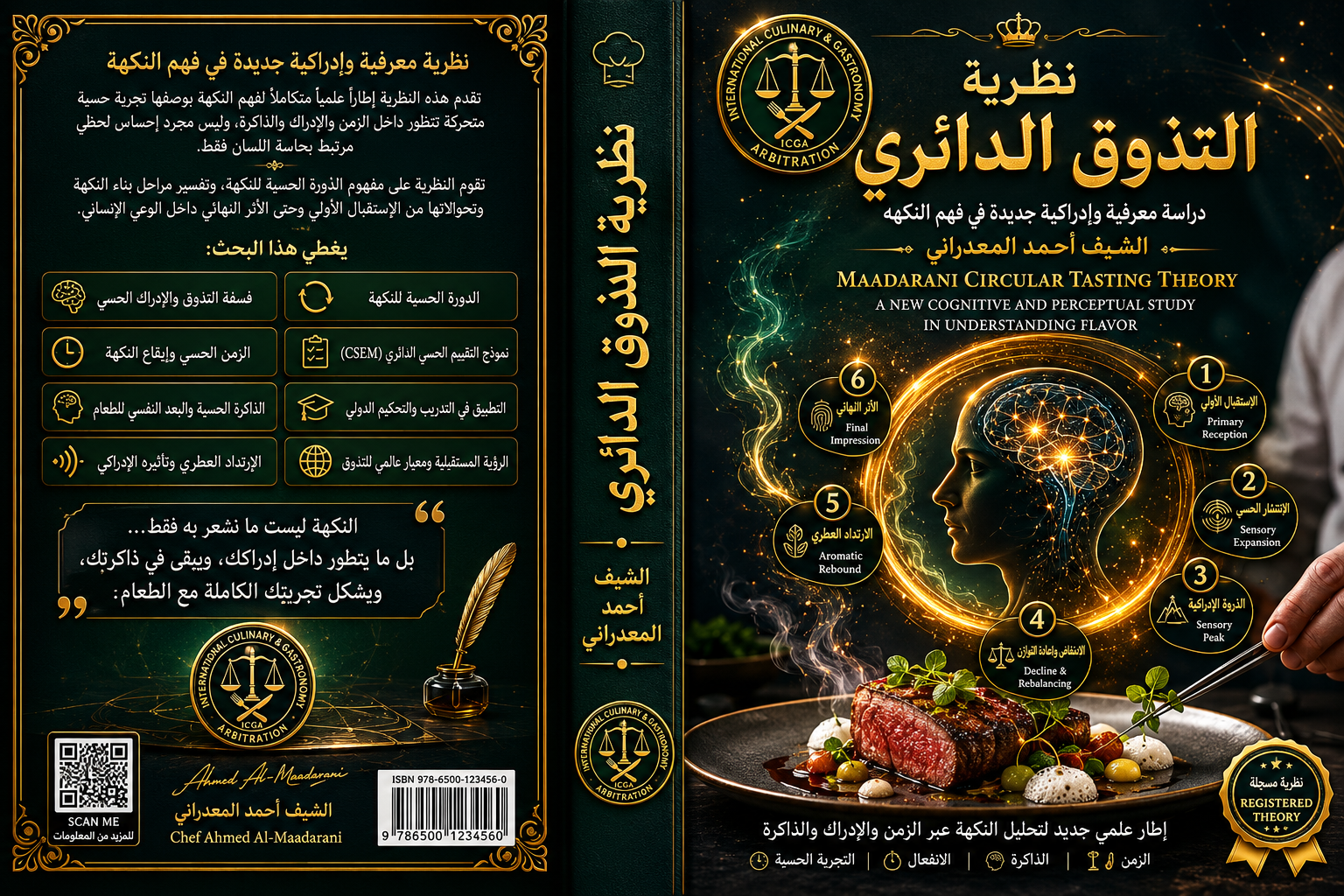
The first major finding of the theory is that flavor possesses an “internal temporal structure.” Food does not reveal itself all at once. It develops gradually through interconnected sensory stages that include the beginning, expansion, peak, decline, aromatic rebound, and final effect. This means that true judgment of food cannot depend only on first impression.
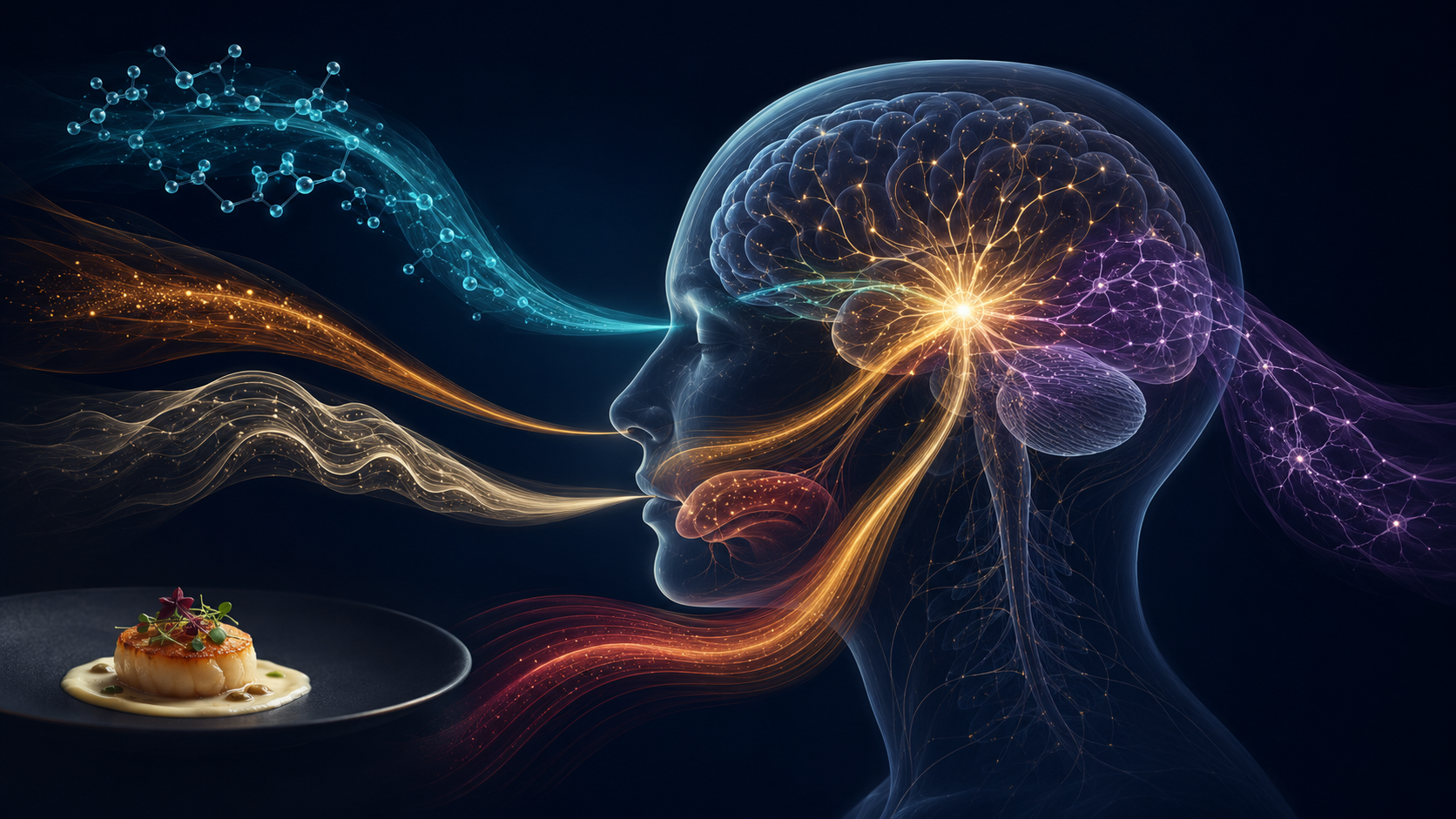
The theory also shows that time is not an external element surrounding tasting, but part of the formation of flavor itself. Every temporal change produces a perceptual change in the way taste, aroma, texture, and psychological emotion appear. Flavor therefore becomes a moving experience rather than a fixed state.
Another important finding is that sensory memory plays a central role in reshaping flavor within perception. Human beings do not taste food only through what they feel in the present moment, but also through what they recall from previous experiences and emotional or cultural associations. The tasting experience therefore differs from one person to another even when they eat the same dish.
Circular Tasting Theory also demonstrates that aromatic rebound represents an independent and essential stage in the sensory cycle, and that many refined foods reveal their depth during this delayed stage rather than only during the beginning or the peak.
The theory also shows that food quality does not depend only on taste strength, but on sensory persistence, balance of transformations, temporal harmony, and the ability of flavor to build a stable perceptual identity. Deep foods are not always the strongest directly; they are the foods most capable of developing and remaining within awareness and memory.
The theory further concludes that texture, heat, fermentation, and the temporal speed of flavor are not secondary elements. They are fundamental factors controlling the movement of the sensory cycle and determining the form of the food’s perceptual experience.
Another key finding is that true tasting requires “cognitive awareness” that allows the taster to notice subtle transformations within the sensory cycle. Rapid or unconscious tasting may prevent the person from perceiving the deep and delayed layers of food.
The Circular Sensory Evaluation Model (CSEM) also demonstrates the possibility of transforming the theory into an applied framework usable in international judging, sensory training, fine dining analysis, food product evaluation, and modern culinary education. This gives the theory a practical dimension alongside its philosophical and perceptual dimension.
The findings also indicate that the future of culinary science will move toward understanding food as an “integrated perceptual experience,” not merely as a food substance. The future chef will therefore need to understand neural perception, sensory time, aromatic memory, and the psychological effect of flavor alongside traditional culinary skills.
The theory also affirms that the construction of new global tasting standards has become possible by adopting the concept of the “complete sensory cycle.” This may contribute to the development of more precise and fair systems for analyzing refined and complex foods.
Thus, the findings show that Circular Tasting Theory does not only provide a new explanation of flavor. It opens the door to rebuilding modern tasting sciences on a deeper and more comprehensive temporal and perceptual basis, which may represent the beginning of a new stage in understanding the relationship between human beings and food.
General Conclusion
Circular Tasting Theory has presented a new conception of flavor as a moving perceptual experience that develops within time, the senses, memory, and psychological emotion, rather than as a momentary response connected only to the tongue. Through this proposal, the theory redefines tasting as an integrated sensory journey that passes through multiple and overlapping stages and ends by forming a stable perceptual identity for food within human awareness.