المعدراني، أحمد. (2026). نظرية التذوق الدائري: دراسة معرفية وإدراكية جديدة في فهم النكهة. IUOAMC Global Platform.
In a professional framework, the theory can be used to build new evaluation models that divide the sensory cycle into stages that can be analyzed and scored. Each part of the food experience can then be evaluated independently while remaining connected to the whole.
The theory affirms that modern judging should not measure only “taste strength,” but the “quality of the perceptual journey” created by food. A professional dish is not merely one that produces rapid admiration. It is one that succeeds in building a coherent sensory cycle that leaves a long-term effect within awareness and memory.
In high-level international competitions, this model may help develop more professional criteria for understanding complex dishes, especially those that rely on fermentation, aromatic layers, thermal transformations, delayed flavors, and temporal construction of taste. These elements are difficult to evaluate accurately within fast traditional models.
Thus, Circular Tasting Theory affirms that true judging does not consist of evaluating food as it appears in one moment. It requires understanding how food moves within time and perception and analyzing its ability to build an integrated, stable, and deep sensory experience within the taster.
Circular Tasting in Fine Dining and Haute Cuisine
Modern fine dining has moved beyond the concept of “delicious food” toward the concept of the “complete sensory experience.” The goal is no longer merely to offer a strong or balanced flavor, but to build a gradual perceptual journey that moves through the taster’s awareness in a deliberate way. This is where the philosophy of fine dining shows strong harmony with the principles of Circular Tasting Theory.
In traditional kitchens, the focus is often on satisfaction and direct taste. In fine kitchens, however, the chef acts as a “perceptual designer” who carefully builds the stages of flavor, allowing the taster to move between different sensations in a way similar to artistic or musical narration.
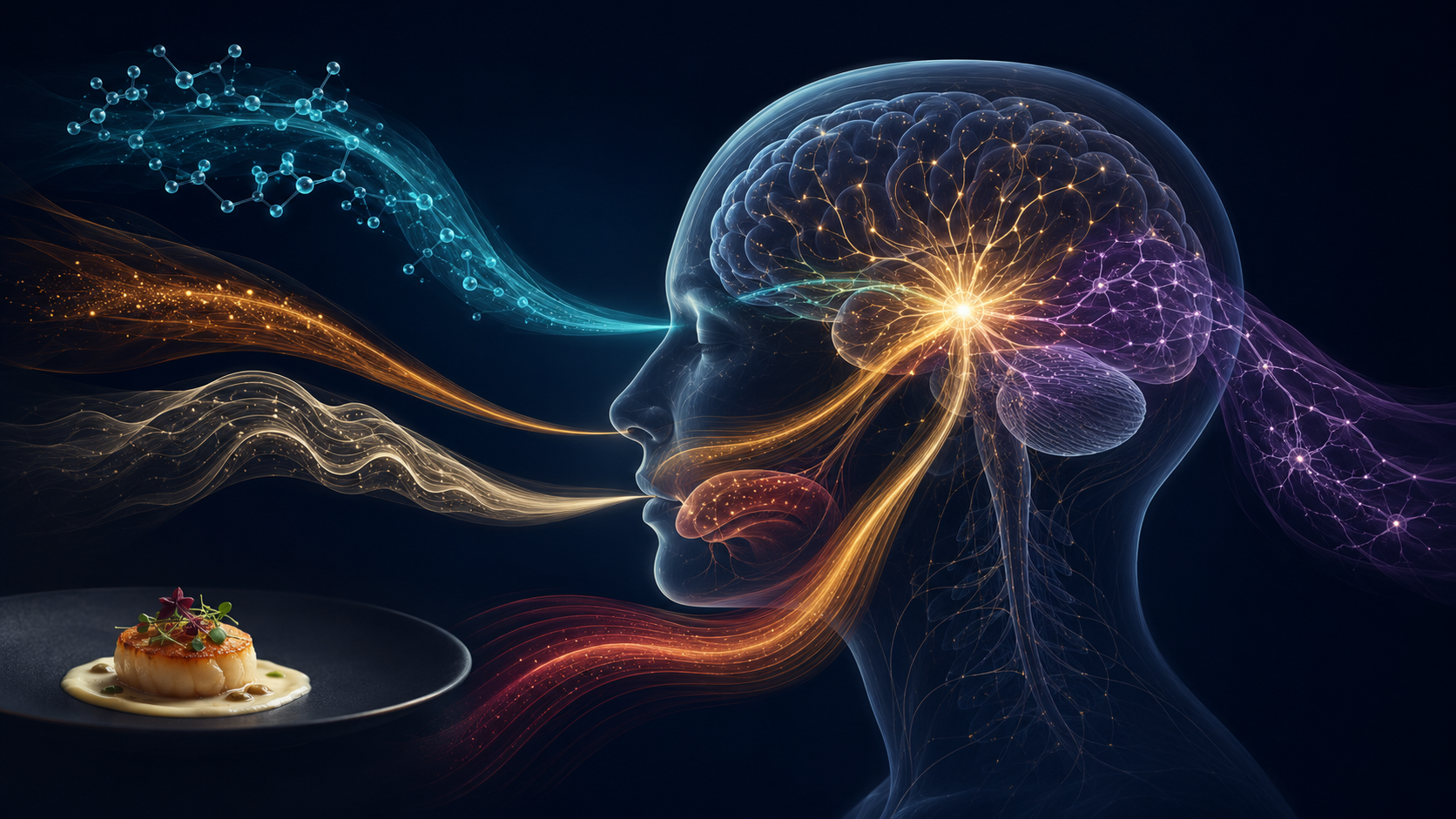
Circular Tasting Theory uses the concept of Gastronomic Sensory Journey. This refers to the way flavor moves within perception while the dish is eaten, beginning from the first impression and ending with the final effect inside memory. In this model, the dish becomes closer to an integrated experience that develops through time than to a fixed and direct taste.
Modern fine kitchens also rely on building “temporal layers” inside food, so that not all flavors appear at the same time. A dish may begin with a light and refreshing sensation, then gradually move toward aromatic depth, warmth, fatty effect, or smoky and delayed endings.
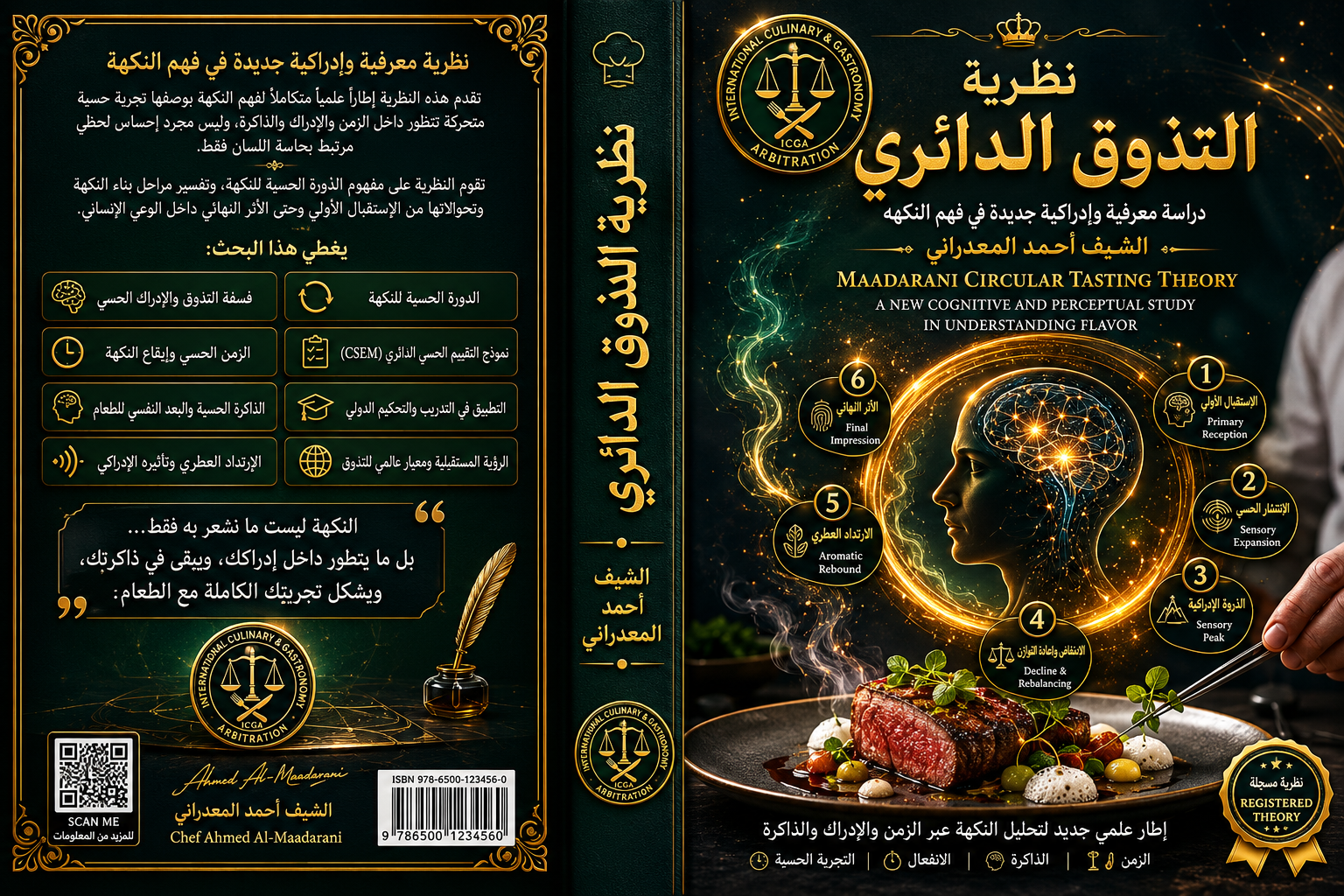
This method corresponds directly with the stages of the circular flavor cycle. The initial reception becomes a perceptual entrance, expansion becomes a stage of construction, the peak becomes the highest moment of influence, decline becomes a space for contemplation, and aromatic rebound becomes a tool for leaving the final trace. Professional modern dishes are therefore often designed to be understood with time, not in a single moment.
Fine kitchens use many elements to control the sensory cycle, such as thermal gradation, fermentation, textural contrast, delayed aromas, fatty layers, acidic balance, and gradual aromatic construction. All these elements aim to control the movement of flavor within perception, not merely the strength of taste.
One important characteristic of fine dining is its strong reliance on “sensory rhythm.” Some dishes begin quietly and then rise gradually, while others are built on successive sensory surprises that create psychological and emotional interaction within the food experience.
Circular Tasting Theory holds that the success of fine dining does not depend only on technique or luxurious ingredients. It depends on the chef’s ability to manage the perceptual time of food. A true dish is not one that reveals itself immediately, but one that invites the taster to discover it layer by layer within the sensory cycle.
In this context, the chef becomes a Sensory Architect: an architect of flavor perception who designs the speed of transformations, the position of the peak, the timing of aromatic rebound, the form of the perceptual ending, and the strength of the sensory effect, all with the aim of creating an unforgettable experience within awareness and memory.
The theory also affirms that successful fine dishes possess a coherent “sensory identity,” meaning that all stages of the circular cycle work harmoniously and serve one unified idea. Food then appears not as a collection of ingredients, but as an experience with personality, rhythm, and a special sensory message.
Circular Tasting Theory thus shows that modern fine dining is no longer merely a culinary art. It has become an art of constructing sensory perception, where flavor is transformed into a developing temporal journey that aims to influence the senses, mind, and human emotion at the same time.
Circular Tasting in Specialty Coffee and Fine Chocolate
Specialty coffee and fine chocolate are among the clearest applied examples of Circular Tasting Theory. Both fields depend strongly on the temporal transformations of flavor and on the taster’s ability to notice changing sensory layers during the perceptual cycle of the food or beverage.
In specialty coffee, for example, quality is not measured only by roast degree or taste strength. It is measured by the way flavor develops in the mouth as temperature, time, and breathing change. Fine coffee may begin with a light acidic sensation, then move toward fruity, floral, or chocolate-like layers before leaving a long aromatic trace within sensory memory.