المعدراني، أحمد. (2026). نظرية التذوق الدائري: دراسة معرفية وإدراكية جديدة في فهم النكهة. IUOAMC Global Platform.
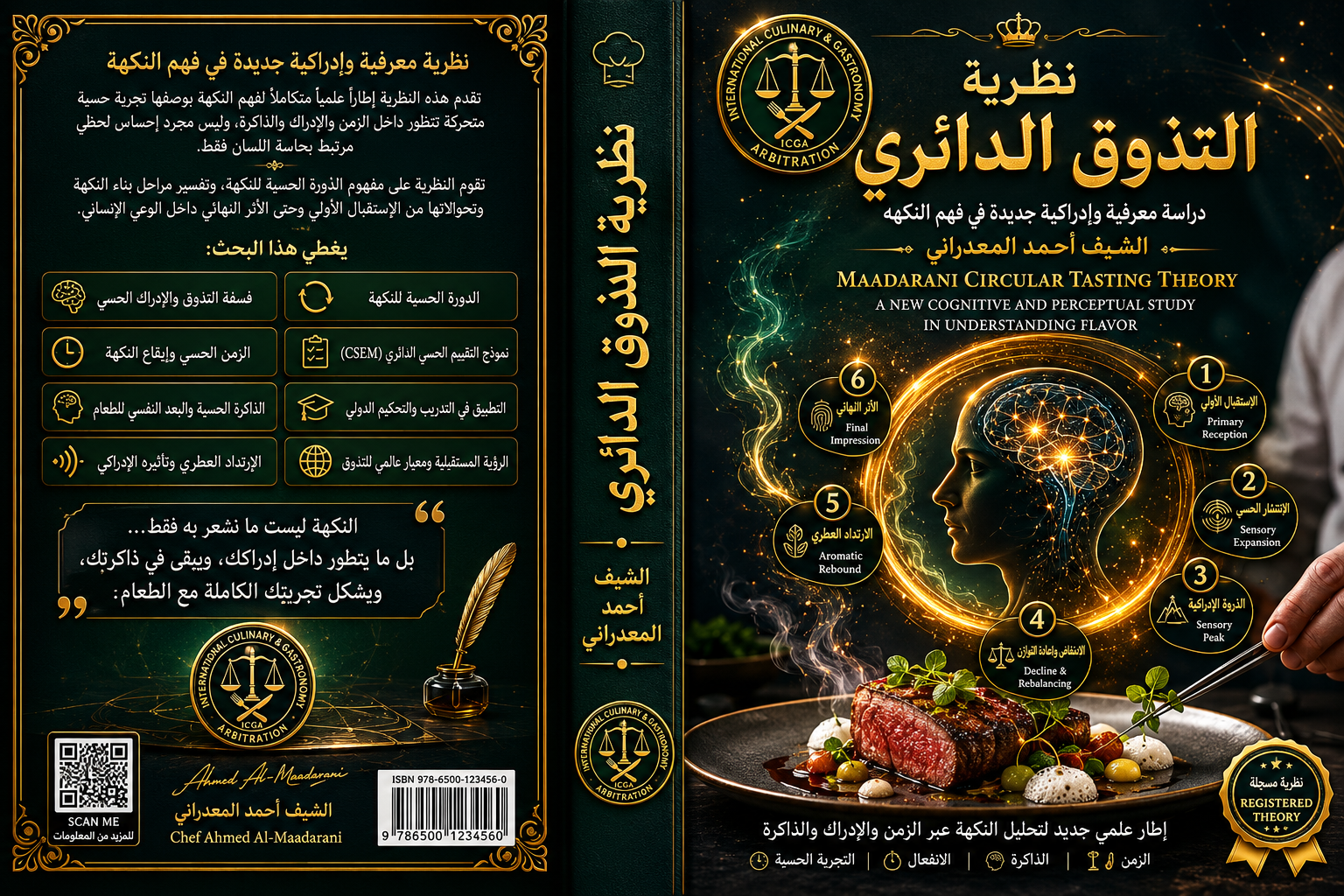
After flavor reaches the perceptual peak, the sensory cycle enters a new stage known in Circular Tasting Theory as Gradual Decline. At this stage, flavor does not disappear suddenly. It begins to transform, calm down, and reorganize itself within perception, allowing new details to appear that were not clear during the peak.
In traditional understanding, the decline in taste intensity may be viewed as the end of the experience. In circular tasting, however, this stage is extremely important because it represents the transition of flavor from strong presence to quiet perceptual depth. Here, the senses begin to recover from the first sensory intensity, allowing the brain to analyze the remaining subtle layers in a more balanced way.
The theory uses the concept of Sensory Rebalancing. This refers to the process through which the senses regain calm after the peak and reinterpret flavor in a different and more contemplative way. At this stage, direct signals decrease in intensity, but perception becomes more capable of noticing the internal connections among the different elements of food.
Circular Tasting Theory also affirms that some foods reveal their sensory truth during the decline more than during the peak. Deep or aromatic flavors may appear only after strong elements recede, especially in fermented, complex, or fat-rich foods and in foods with delayed aromas.
At this stage, the brain begins moving from “direct sensation” to “perceptual analysis.” Instead of focusing on the strength of taste, the taster begins noticing the quality of the remaining trace, the balance of the ending, flavor continuity, thermal changes, remaining aromas, and final psychological sensation.
This stage is therefore very important in professional sensory judging because it reveals whether flavor is truly coherent or whether it depends only on the power of its beginning or peak.
One important characteristic is that gradual decline does not occur at the same speed in all foods. Light or sharp foods may decline quickly, while deep, fatty, or aged foods preserve their presence for a longer period within perception. This difference forms part of the “temporal identity” of food.
Temperature and texture also play a major role in the shape of sensory decline. Foods with slow melting or high fat content often give flavor a more extended and stable ending, while dry or rapidly dissolving structures produce a shorter and sharper finish.
In modern professional kitchens, chefs do not design only the peak; they also design the “manner of decline.” Some chefs ensure that flavor ends quietly and harmoniously, while others use a sudden or sharp ending to create a specific psychological effect within the food experience.
Circular Tasting Theory also considers this stage a bridge toward aromatic rebound and the final effect, because the recession of direct signals allows delayed effects to appear, forming the deepest part of the sensory cycle.
Thus, the theory affirms that gradual decline is not the disappearance of flavor, but its reshaping within perception. The experience shifts from direct sensory strength to contemplative depth, memory, and emotion, making this stage fundamental to understanding the quality and sensory integration of food.
Phase Five: Aromatic Rebound and Cognitive Return
After gradual decline, the sensory cycle enters one of its deepest and most complex stages: Aromatic Rebound and Cognitive Return. This stage is one of the main foundations that distinguishes Circular Tasting Theory from traditional models, because it proves that flavor does not disappear when direct sensation ends. It returns through different sensory and neural pathways.
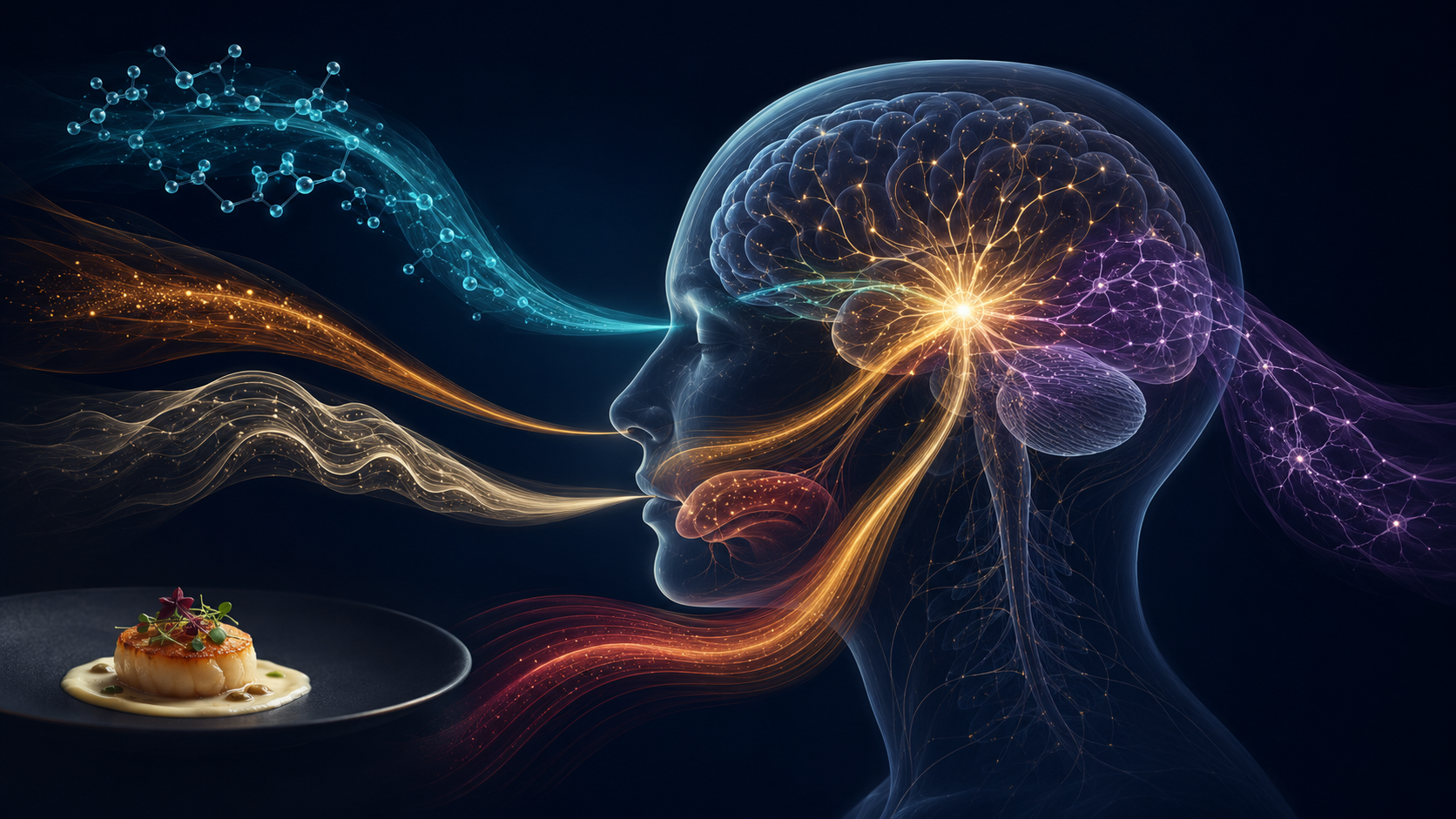
At this stage, remaining aromatic compounds begin moving from the mouth toward the olfactory system through retronasal breathing. Aromas and sensory effects appear that were not clear during the peak or even during chewing. The taster feels that the food has “returned” in a new, quieter, and deeper form, as if flavor has begun a second perceptual cycle within sensory awareness.
The theory uses the concept of Aromatic Cognitive Return. This refers to the return of flavor to perception after its apparent decline, but in a different form that depends on memory, delayed aromas, and calm neural analysis. At this moment, the experience changes from direct sensation into a contemplative state within the mind and senses.
The theory also holds that this stage reveals the “deep truth” of food, because strong sensory signals have calmed down, leaving only the more stable and influential elements within the perceptual structure. Some foods that seem ordinary at the beginning may reveal their true value during delayed aromatic return.
Aromatic rebound appears clearly in specialty coffee, dark chocolate, smoked foods, fermented products, complex aromatic spices, and aged cheeses. In these foods, internal aromas continue to move within perception even after eating has ended, giving the experience a long-lasting temporal and sensory extension.
This stage is also strongly connected to memory and psychological emotion. When flavor returns after disappearing, the brain begins connecting it more deeply to feelings and previous experiences, making food more capable of creating a sustained human and emotional effect.
Aromatic rebound is not always an identical copy of the beginning. It may appear with a completely different character. Flavor may begin sharp and then return smooth; it may begin simple and then return complex; or it may begin as taste and later transform into an aromatic, thermal, or psychological sensation. This transformation represents the essence of the “circular movement of flavor” within perception.